
The Cohera blog · Energy check-ins
Flowing or On Fire? Notice the difference without chasing either
By Ella
Some days, your work feels easier to meet. Ideas connect, you’re curious about what you’re making, and you have room to enjoy the process. On other days, that feeling is more intense. You’re full of ideas and eager to bring them to life.
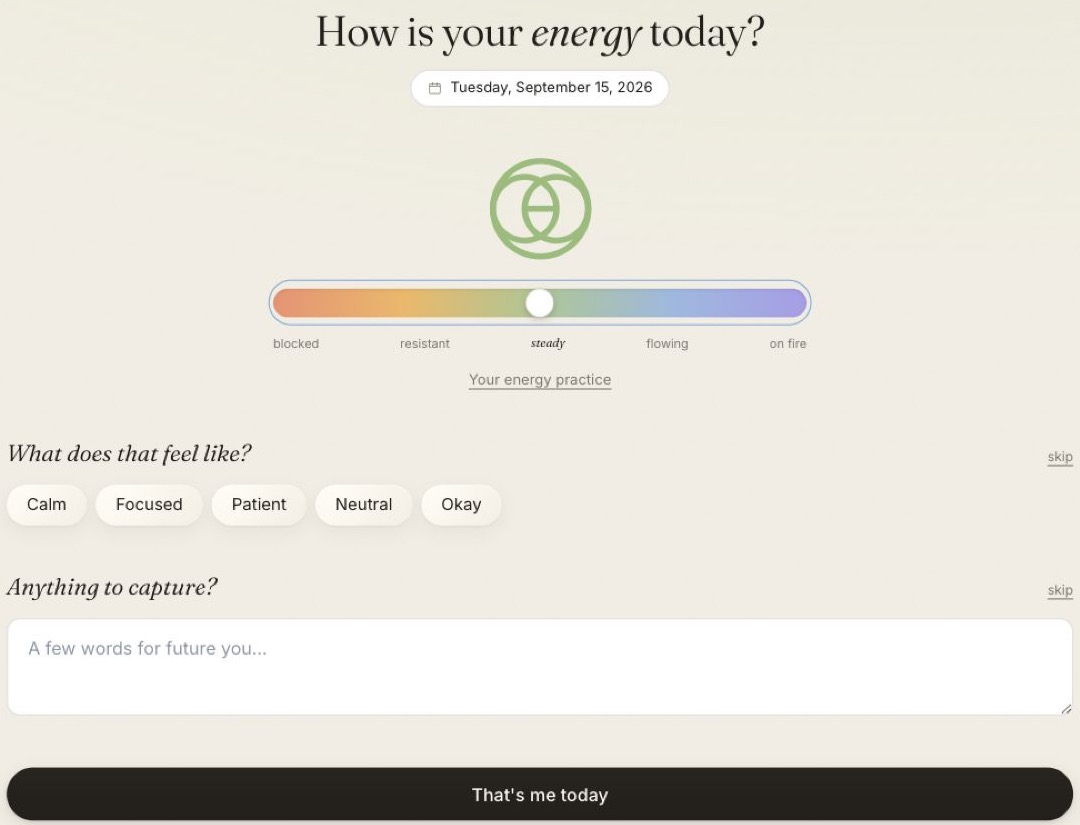
When you check in with Cohera, you might wonder whether to choose Flowing or On Fire. Both describe moments when energy feels available, but noticing the difference can help you decide what you have room for today.
Notice the quality of your energy
Flowing might feel like being absorbed in your work without needing to force it. You could feel curious, connected, clear, playful or grateful. There can be an ease to continuing, even when the work still takes effort.
On Fire might feel more enthusiastic or expansive. Inspired, joyful, confident, alive or unstoppable may sound closer to your experience. You might want to explore several ideas or feel ready to share something you’ve been holding back.
These descriptions are starting points. Choose the one that feels closest, then use the emotion options in your Journal to notice what makes today feel that way. You don’t need to find a perfect label.
Let a good day be a good day
It can be tempting to turn a day like this into an expectation: “Why can’t I feel this way all the time?” Or to feel that you should make the most of every moment before it passes.
Flowing and On Fire aren’t standards you need to maintain. A Steady day is worthwhile too, and a Blocked or Resistant day doesn’t undo your commitment to your work.
You can enjoy having energy without making yourself spend all of it. There is room to create, take breaks and leave something for tomorrow.
Prepare ahead if you have room
If sharing your work feels manageable today, you could use some of that capacity to make a future day easier. Consider what would help:
- Prepare a post you already want to share. A brief description can give Cohera’s AI caption assistance something to work with.
- Choose when it can go out. Scheduling lets you prepare now without needing to return at publishing time.
- Look at the space you’ve created. Check the calendar and notice what is already covered before deciding whether to add more.
There is no need to fill every gap. You might prefer to spend today making your work, or simply enjoying the way it feels to be in it.
Let your check-in help you recognise what is available. Planning ahead is one way to use that energy, not something you owe because you have it.