
The Cohera blog · Sharing artwork
One drawing, more than one story
Find several social media stories in one piece of artwork
By Ella
Once you’ve shared a photograph of your finished work, posting about the same piece again can feel repetitive. You’ve already shown what it is, and the next piece might not be ready.
But there may be more to share about the work in front of you. Where it began, what you used and the details someone might miss can each offer a different story.
This drawing was inspired by trees I saw in Spain and ballet. I didn’t have my regular pens with me, so I used a ballpoint pen. Looking at it now, there are several things I could share beyond the finished image.
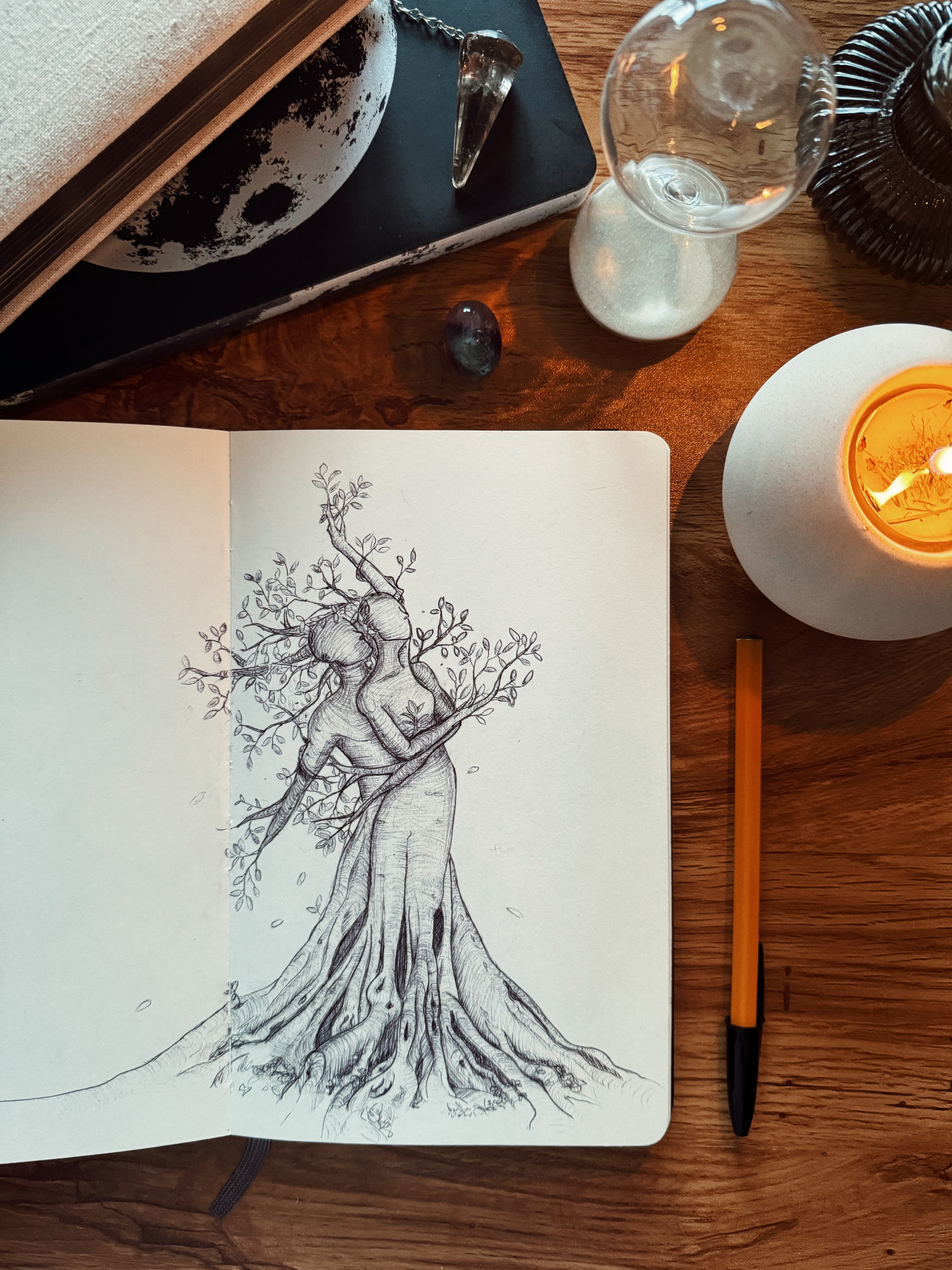
Find different stories within the same piece
For this drawing, I could begin with three angles:
- The inspiration. Trees I saw in Spain and ballet were the starting points. Sharing that gives someone a way to see the connection between the figures and the branches.
- The tool I worked with. I didn’t have my regular pens, but I didn’t want that to stop me drawing. I used a ballpoint pen and focused on the detail I could achieve with it.
- A detail worth looking at closely. A closer view of the roots or leaves could show the smaller marks that are easy to miss in the full photograph.
The drawing stays the same, but each post gives someone something different to discover. You don’t need to use every angle; choose the ones you have something real to say about.
Give each post its own starting description
If I wanted help shaping the story about the pen, I could begin a post in Cohera with the photograph and a brief description:
I didn’t have my regular pens with me, so I used a ballpoint pen. I didn’t want that to stop me drawing, and I focused on the detail I could get with the tool I had.
AI-assisted captions can help bring those thoughts into more cohesive wording, with available approved writing examples helping guide the tone. I would read the suggestion through to check that it still sounded like me and reflected what happened.
A post about the inspiration would start with a different description, focusing on Spain and ballet. Giving each post its own starting point helps keep the captions from becoming several versions of the same general introduction.
Match the photograph to what you want people to notice
The full photograph introduces the drawing in its sketchbook. A closer view could support a caption about the ballpoint marks or the smaller details within the branches.
Before finishing each post, check:
- Can the reader see what I’m describing? Choose an image that helps explain the words.
- Does this add something to the earlier post? A new detail or perspective gives it a purpose of its own.
- Are the details accurate? Keep the caption close to the decisions and materials you actually used.
If you don’t have a photograph that supports an idea, you can keep that story for another time. There is no need to reconstruct the process just to fill a space in the calendar.
Give each story a place in your calendar
Once you have reviewed the posts, you can schedule them in Cohera across dates that suit your plans. Look at them alongside the other content you intend to share, rather than treating them as a sequence you must publish immediately.
This approach can work for other kinds of making too. A musician might share a finished recording, a change to a lyric and a short glimpse of an instrument used in the arrangement. The connection is the work; each post reveals a different part of it.
Choose a piece you’ve already shared and look for one detail you haven’t explained.
Let that be the starting point for your next post in Cohera.